
"defect inspection"
200 article(s) found
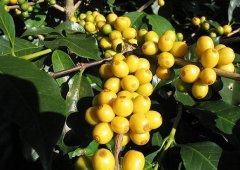
A brief introduction to the Origin and Development of Flower-scented Apricot Coffee beans in Ethiopia
Ethiopia grows coffee in different climatic zones, so it has more than 140 farm varieties, and fresh coffee is produced all the year round. The quality of Ethiopian coffee varies according to different elevations and regional ecological environment. The Harar coffee in the southeast highland is a typical Muha coffee with a strong flavor; the coffee produced in the southwest Wollega has a rich fruity flavor; Limu coffee

A brief introduction to the description of flavor, taste and aroma characteristics of sweet Ethiopian boutique coffee beans
Interestingly, Ethiopians also put pictures of horses on the coffee package to show the purity of the coffee. It is said that in the era when horses were the main means of transportation, Ethiopia had the best thoroughbred horses of Arab origin in the world, and Ethiopians were proud of it. Now they give this pride to Ethiopian coffee. High-quality coffee should be like a thoroughbred.

A brief introduction to the treatment method of grinding degree and baking degree of Ethiopian boutique coffee beans
Even the official research unit of Ethiopia does not know how many Arabica subspecies there are in Ethiopia. The coffee cooperatives in this mountain are certainly different from those planted in another mountain, and even small farmers in the same region grow different varieties of coffee. Like the little Jasper of Suzhou, although she is petite, she is gentle and delicate, sweet and lovely, and can attract ten thousand without any decoration.

Flavor description of Ethiopian Sidamo Coffee Variety introduction to Regional treatment of Manor production
Ethiopian Sidamo Coffee Flavor describes the taste of Ethiopian coffee grown in close to the natural environment, after years of planting under the same growth conditions, Ethiopian coffee beans have gradually adapted to the environment here. More than 60% of coffee beans are grown in forests or semi-forests. Coffee growers on a large scale

A brief introduction to the treatment method of grinding degree and baking degree of sweet Ethiopian boutique coffee beans
Even the official research unit of Ethiopia does not know how many Arabica subspecies there are in Ethiopia. The coffee cooperatives in this mountain are certainly different from those planted in another mountain, and even small farmers in the same region grow different varieties of coffee. Like the little Jasper of Suzhou, although she is petite, she is gentle and delicate, sweet and lovely, and can attract ten thousand without any decoration.

Multi-layered taste of Ethiopian fine coffee beans Flavor Taste Aroma Description Introduction
The girl scraped the powder out bit by bit with a small wooden spoon and poured it into a small-necked, bulging, big-eared earthenware pot. She added clean water and boiled it on a small stove. The water boiled very quickly. After boiling for a while, the fragrance was already overflowing. The girl placed several china cups the size of wine cups on a small wooden box, then lifted the big ear of the coffee pot to fill each cup one by one, and then put down the pot, one cup at a time.

A brief introduction to the Origin, Development, History and Culture of aromatic High-quality Ethiopian Coffee beans
It is usually a teenage girl who prepares coffee for everyone at home. She first grabbed a handful of light green raw coffee beans, put them in a small iron pot on the charcoal stove, scooped up clean water, and scrubbed them with both hands. Then roast the coffee beans with a small wooden shovel, and soon the coffee beans begin to turn dark black and emit an attractive fragrance. When the girl thought it was time for the fire, she picked up the iron pot handle

A brief introduction to the cultivation of Ethiopian boutique coffee beans with multi-level taste, geographical location, climate and altitude
Even the official research unit of Ethiopia does not know how many Arabica subspecies there are in Ethiopia. The coffee cooperatives in this mountain are certainly different from those planted in another mountain, and even small farmers in the same region grow different varieties of coffee. Like the little Jasper of Suzhou, although she is petite, she is gentle and delicate, sweet and lovely, and can attract ten thousand without any decoration.

A brief introduction to the treatment method of grinding degree and baking degree of aromatic high-quality Ethiopian coffee beans
Ethiopia finally woke up and decided to learn from the skills of Western developed countries in mastering brands and creating value for the benefit of hard-working farmers, so in March 2005, Ethiopia applied to the United States Patent and Trademark Administration for the trademark rights of three famous places of origin, namely, Sidamo, Yega Xuefei and Harald. In the future, American operators must be authorized by Ethiopia to sell boutique coffee in these three places.

A brief introduction to the treatment method of grinding degree and baking degree of Ethiopian fine coffee beans of flower-scented apricot
Even the official research unit of Ethiopia does not know how many Arabica subspecies there are in Ethiopia. The coffee cooperatives in this mountain are certainly different from those planted in another mountain, and even small farmers in the same region grow different varieties of coffee. Like the little Jasper of Suzhou, although she is petite, she is gentle and delicate, sweet and lovely, and can attract ten thousand without any decoration.

Kenyan coffee beans graded by the number of defective beans Introduction to fine coffee
This is the earliest grading method and is still in use in many parts of Brazil. The method of identification is to take a random sample of 300 grams and put it on black paper, because black paper can best avoid reflection. Then, professional appraisers carefully inspect the samples to find defective beans and accumulate different scores according to the types of defects. For example, one black bean counts as one.

SCA training exam certification course title outline SCA barista certificate useful? Gold content high?
At which stage of sensory analysis are pairwise preference tests or desirability criteria used? a Arouse b Explain c Test d Analyze which of the following options is the main inherent challenge of sensory science a It is purely subjective analysis b It requires humans as a "tool" that is highly variable, error-prone, and productive

Magic country-Colombian Coffee History and Culture how to distinguish between Colombian Coffee grades
For more information on coffee beans, please follow the coffee workshop (Wechat official account cafe_style) Colombia has Bolivar, the hero of the independence movement, and Marquis, the giant who wrote the literature of "A hundred years of Solitude," but it is after the 1990s that the few Latin American countries absent from democratization or left-wing regimes have been politically fostered by the United States.

Hand-brewed coffee beans how to select defective beans? What are defective beans? Which are defective beans?
Professional coffee knowledge exchange more coffee bean information please follow the coffee workshop (Wechat official account cafe_style) We are looking for "defective beans". The so-called defective beans (defected beans) are poor quality, bad coffee beans, or substances other than coffee beans mixed in the whole bag of coffee beans. We will pick the beans before the coffee beans are roasted.

Which South American coffee brands have the highest grade of Colombian Huilan coffee, which is known as a national treasure?
Professional coffee knowledge exchange more coffee bean information please follow the coffee workshop (Wechat official account cafe_style) front street-Colombia Huilan producing area to introduce Colombia, beautiful mountains and rivers, beautiful scenery, pleasant climate, spring all year round, fresh air, refreshing. Colombia's mild climate, humid air, and diverse climate make it a harvest season all year round.

Jamaica Blue Mountain Coffee Beans-Blue Mountain Coffee Beans-Jamaica Blue Mountain Coffee Beans-Jamaica Blue Mountain Coffee
Sir Nicolas Lawes, Governor-General of Jamaica, brought the first coffee seedlings to Jamaica from Martinique. By 1790, among the refugees from Haiti were coffee farmers who settled in the Blue Mountains and also brought

A brief discussion on the perennial evergreen shrubs of the genus Coffee
1. Summary: coffee is a perennial evergreen shrub or small tree of Rubiaceae. It is native to tropical Africa and has been cultivated for more than 2000 years. The Arabs began to grow coffee in 525 BC, and it was popular for Arabs to stir-fry coffee beans. They began to grow coffee beans on a large scale after the 15th century, and were widely distributed in the tropics and subtropics of Europe, Asia, Africa and Latin America after the 18th century.

How to choose defective coffee beans? There is a knack for picking coffee beans.
Professional coffee knowledge exchange more coffee bean information Please pay attention to the efficiency of manual sorting in the coffee workshop (Wechat official account cafe_style). The trick is to regularize the sorting process to pick out defective beans from a large number of coffee beans, which is a very time-consuming and time-consuming task. But as long as you get the hang of it, you can do it efficiently. When picking out defects in raw beans, it is recommended that they be dull.

Coffee defective beans how to choose coffee beans bad beans coffee beans defective beans how to divide
Professional coffee knowledge exchange more information on coffee beans Please follow the coffee workshop (official Wechat account cafe_style) to pick out defective beans from a large number of coffee beans, which is a time-consuming and time-consuming task. But as long as you get the hang of it, you can do it efficiently. When picking out defects in raw beans, it is recommended to spread the beans on a dull black tray. Like fermented beans or unripe beans.

Typical aroma and flavor descriptions of traditional Rwandan and Burundian coffee cups
Rwanda and Burundi are small landlocked countries located in the heart of the Great Lakes region of Africa. Although their specific histories are different, they have something in common in terms of coffee origin and society. Both countries are small countries with problems in history, but the boutique coffee they produce is very good, and it is very interesting that both of them have high average growth altitude and excellent coffee soil.